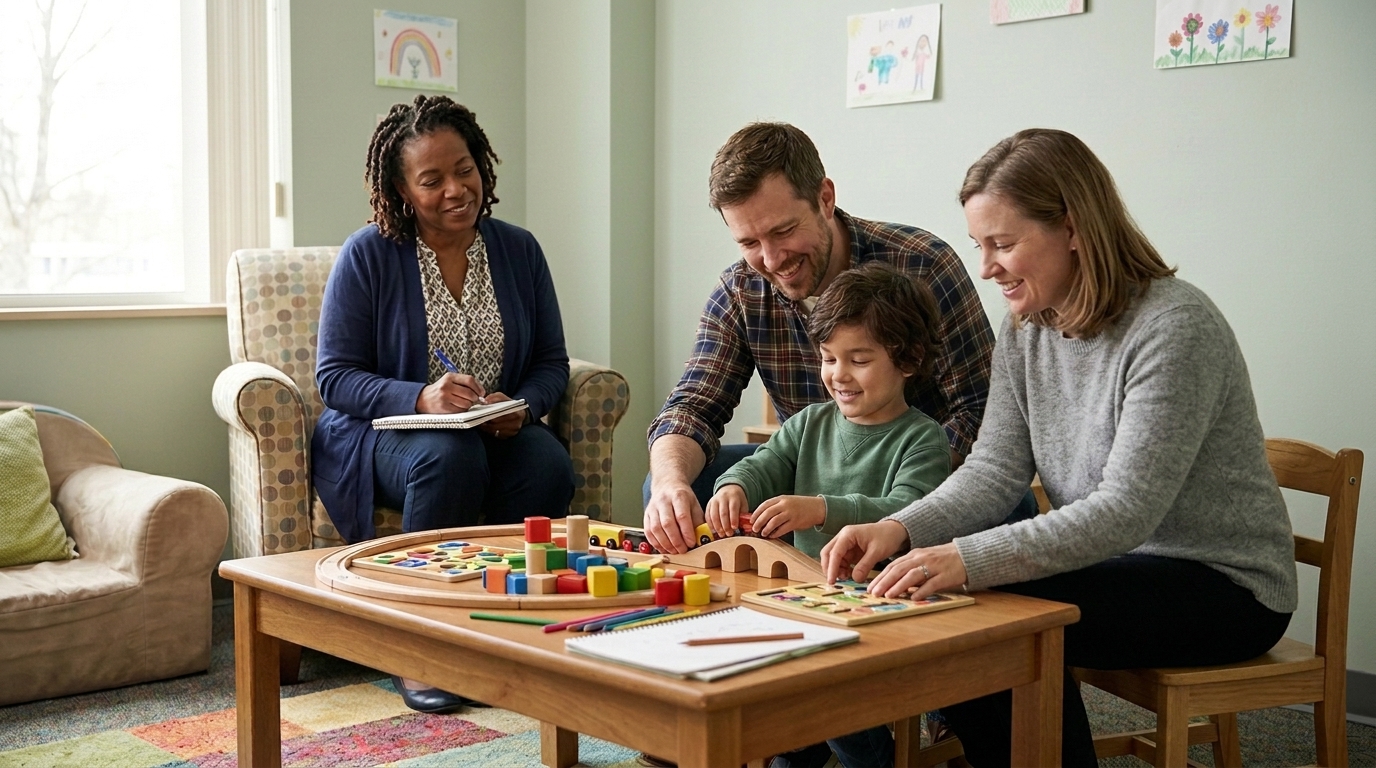
Contact plays a vital role in helping children maintain relationships with family members, rebuild trust and experience positive interactions in a safe environment. When delivered thoughtfully, contact can strengthen identity, support emotional wellbeing and provide children with a sense of continuity during periods of uncertainty.
For many children, contact sessions are more than scheduled meetings — they are opportunities to feel seen, valued and connected. This is why the environment, the practitioner’s approach and the structure of the session all matter. A calm, predictable setting helps children feel secure, while clear boundaries and sensitive support ensure that interactions remain positive and child‑focused.
Parents also benefit from guidance on how to prepare for sessions. Simple steps such as arriving on time, bringing familiar items or planning age‑appropriate activities can help create a more meaningful experience. Practitioners play a key role in modelling positive communication, supporting emotional regulation and gently redirecting interactions when needed.
A trauma‑informed approach is essential. Children may arrive carrying anxiety, confusion or mixed emotions. Practitioners who understand trauma responses — such as withdrawal, hypervigilance or sudden changes in mood — can respond with empathy rather than judgement. This helps children feel safe enough to engage at their own pace.
Ultimately, high‑quality contact is built on sensitivity, structure and a deep understanding of each child’s lived experience. When these elements come together, contact becomes a powerful tool for healing, connection and long‑term stability.